Showing posts with label Social issues. Show all posts
Showing posts with label Social issues. Show all posts
Friday, August 7, 2009
Right Wing Mob Disrupts Town Hall In Tampa
TBO.com
Published: August 6, 2009
U.S. Rep. Kathy Castor, the focus of tumultuous reaction at a town hall meeting last night, said in an interview this morning that the event has strengthened her conviction to support health care reform.
"It has strengthened my resolve to stand up for families and seniors," Castor said. "Floridians are bearing a great burden in health care costs, more than almost any other state."
"A healthy debate is good, but the rude behavior is not helpful," she said. "I think it backfires. The response we're receiving today is pretty overwhelming to speak up for families and bring down the cost of health care."
:::
Personally I think those white right wingers are more Frightened of a black man being in the White House as most of them no doubt believe he is Muslim, a communist, and a terrorist. I think this is more about Obama being President than Healthcare.
Healthcare is just a front for them, a cover, for being racist and sore losers.
I beleive in free speech but those people aren't "speaking their mind," they're DISRUPTING. They're preventing anyone else from speaking. They're not saying anything; they're simply making noise. This is NOT a "freedom of speech" issue. If you were to ask even one of them to elaborate on their "views," you would discover they can't. They don't have any "views." They are knee-jerk reactionary assholes who can't think for themselves. They are sheep who are easily swayed by outlandish lies and propaganda. - Fraze2K


Friday, November 28, 2008
Why Black Businesses Have A Hard Time Surviving In America

Why do Black businesses have a hard time surviving in America? Deric Muhammad did a good job trying to explain this problem and to offer some advice to black entrepreneurs. Deric Muhammad breaks it down like this:
Over 300 years of chattel slavery in America totally destroyed Black people’s natural desire to do-for-self. After Abraham Lincoln issued the executive order known as the Emancipation Proclamation, Black slaves were declared free, yet were given few opportunities to make a living to feed their families. Many slaves immediately returned to the plantations of their slave masters because they did not know what else to do.
For a long time, slaves were forbidden to read and write. However, the slave master made certain they knew how to count. How else were they to keep up with their daily cotton quotas on the plantation? Many slaves utilized the skills that they mastered as plantation workers and began doing business for themselves. As a matter of fact many slaves had already started businesses and became strong enough economically to purchase freedom for some of their family members. A price was paid before Black people were able to do business in the United States of America.
Yes slavery played a big part in shaping black people mind set to form somewhat of a dependency on white people. But later on, after slavery and during Reconstruction and Jim Crow, black people started businesses and over all a lot of the businesses were successful. One reason is, prior to integration blacks were not welcome in white establishments so they relied on black businesses for their services. So these black businesses strived. But when segregation ended black customer made a mad dash to the white businesses and left the black businesses to struggle. Deric Muhammad goes on to explain:
Our businesses thrived in this country when we understood the urgency of moments in time like “Reconstruction,” the Great Depression and Jim Crow. We knew that if we did not support one another we could not survive. Prior to integration, Whites refused to do business with us.
These days it is difficult to keep a Black business open. According to statistics, Black-owned businesses open and close faster than businesses owned by any other ethnic group in America.
He goes on to talk about some of the problems plaguing black businesses today. He also offers advice on how to correct this problem so black businesses can be competitive in todays market:
I regularly hear horror stories about how hard-working people pay Black contractors to do a job that never gets finished. You sometimes show up at a coffee shop or restaurant and they are closed when they are supposed to be open. Too often, we say that we will have a service completed by a certain date and fail to deliver. Many Black businesses close themselves down.
Now let’s flip the coin to the Black business patron. Too often good Black businesses cringe at doing business with our own people, because we are always looking for “the hook-up.” There are good Black contractors who finish jobs and then are paid with a rubber check! We show up at the Black coffee shop just to use the internet and then go buy a latte from Starbucks. Sometimes Black business owners just give up or move to the suburbs because doing business in the ‘hood, proves to be too challenging.
In all fairness, these business snafus are not only relegated to Black businesses. You can go anywhere in town and find poor customer service. However, if we are to survive during these economically challenging times, we must get back to the basics of nation building and self-development. We must support Black businesses that are serious about doing business and eliminate businesses that poison the water that we all must drink from.
In order to do business, we must show character. We must open and close when we say we will open and close. We must treat the Black customer with the same regard that we would treat a dignitary. It does not matter whether the brother or sister is spending $5 or $5,000. If you treat us like kings and queens, we will return to do business with you once again.
Saturday, March 22, 2008
America’s New Slavery: Black Men in Prison
Excerpt
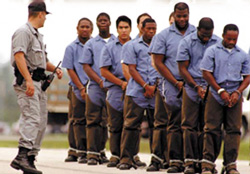
A new American slave trade is booming, warn prison activists, following the release of a report that again outlines outrageous numbers of young Black men in prison and increasing numbers of adults undergoing incarceration. That slave trade is connected to money states spend to keep people locked up, profits made through cheap prison labor and for-profit prisons, excessive charges inmates and families may pay for everything from tube socks to phone calls, and lucrative cross country shipping of inmates to relieve overcrowding and rent cells in faraway states and counties.
Advocates note that the constitution’s 13th amendment, ratified in 1865, abolished slavery in the United States, but provided an exception—in cases where persons have been “duly convicted” in the United States and territory it controls, slavery or involuntary servitude can be reimposed as a punishment, they add. The majority of prisoners are Black and Latino, though they are minorities in terms of their numbers in the population.
According to “One in 100: Behind Bars in America 2008,” published by the Pew Center on the States, one in nine Black men between the ages of 20-34 are incarcerated compared to one in 30 other men of the same age. Like the overall adult ratio, one in 100 Black women in their mid-to-late 30s is imprisoned.
****
Friday, February 22, 2008
Tavis Smiley criticism of Barack causes firestom
Tavis Smiley, the bestselling author of the "Covenant With Black America," is in a world turned upside down. He said he's being "hammered," "barbecued," and is "catching hell" from black Americans for suggesting that Sen. Barack Obama (D-Ill.) made a major mistake by declining to speak at the State of the Black Union event that Smiley plans to host next week in New Orleans.
"There's all this talk of hater, sellout and traitor," Smiley said to me in a telephone interview. Smiley even mentioned getting death threats, but wouldn't elaborate. He said his office has been flooded with angry e-mails. "I have family in Indianapolis. They are harassing my momma, harassing my brother. It's getting to be crazy," Smiley said.
Smiley's problems started early this month after he invited Obama to speak at the State of the Black Union, an event Smiley founded nine years ago. Held annually during Black History Month and broadcast by C-Span, the event gathers a Who's Who of black intellectuals, pundits, activists, entertainers and politicians to discuss and brainstorm about where black America is and where it is headed. This year's topic is "Reclaiming Our Democracy, Deciding Our Future."
The State of the Black Union has grown into a key event for black people since its start, but as Smiley has discovered, Obama's presidential run is far more highly regarded.
As the first black person to have a legitimate shot at a presidential nomination, defeating Sen. Hillary Clinton's rich campaign juggernaut, Obama is virtually a third civil rights movement, the manifestation of Rev. Martin Luther King Jr.'s dream. His candidacy has produced a fervor in black America born of centuries of wanting. Nearly every black vote that Clinton thought was hers at the beginning of the race has been siphoned by Obama.
Each of the presidential candidates were invited to speak, but only Sen. Hillary Clinton accepted. Clinton is desperate to bolster her flagging campaign with a larger share of the black vote after losing all but a small percent to Obama. Smiley said he wants the candidates to focus on the issues that black Americans care about.
If the blogosphere is any reflection, however, black America believes Smiley should check his ego. Commenters would much rather see Obama campaigning against Clinton in Texas and Ohio than at Smiley's confab in Louisiana, a state he's already won. Critics burned up Internet chat rooms, taking turns at denouncing Smiley. Pundit Melissa Harris-Lacewell, an Obama supporter, authored a biting anti-Smiley opinion on TheRoot.com (which is owned by Washingtonpost.Newsweek Interactive), entitled, "Who Died and Made Him King?"
A fan of Smiley commented on one blog, saying, "Tavis, Ya Killin' Me, Man." An angrier writer headlined his comment, "This is just dumb." "This man is involved in the fight of his life for the presidency of the UNITED STATES, not black states," he wrote of Obama. "I don't know if Tavis got the memo, but Hillary is leading in Texas, Ohio and Pennsylvania, where the governor said that his white folks won't vote for a black." Other comments would likely be blocked by Net Nanny and can't be printed on the Web pages of a family newspaper.
For Smiley, the tumult is a major turnabout. Until now he was a darling commentator in black America. His passion for the people endeared him to many. People listened to his commentaries on the popular Tom Joyner Morning Show, and snapped up so many copies of the "Covenant" that it made the top ten lists of the both the New York Times and the Washington Post. When Smiley talked, black people listened.
"One of my friends said, 'you are being barbecued in the blogosphere,'" Smiley said. He told Black America Web writer Michael Cottman's that "I'm catching hell." In our interview, Smiley said: "This is the first time in my entire career that I have found myself in this kind of relationship with some folk in black America. I now know what it feels like to have the weight of the Internet world bearing down on you. Man, it's an eye opener when you get caught in the middle of it."
Obama's campaign said he called Smiley twice on his cell and office phones. Smiley said he returned the calls but got no response.
On the Tom Joyner Morning Show recently, Joyner brought up the controversy during an interview with Obama, relating how Smiley was taking heat for saying he thinks Obama doesn't want to talk about issues black people care about.
Obama chastised Smiley, but spoke as if the two were friends. "I'm going to have to call Tavis up and straighten him out on this," Obama said. He said he's addressed issues that Smiley cares about, such as health care and eliminating the legal sentencing disparity that allows judges to send mostly black crack cocaine offenders to prison with sentences that are five times longer than powder cocaine offenders who are mostly white and Latino.
Obama followed up with a letter to Smiley, dated Feb. 13. In it, Obama explained why he declined the invitation, saying that he needed to campaign in states that Clinton must win to in order to topple her candidacy.
"I will be on the campaign trail every day in states like Ohio, Texas and Wisconsin talking directly to voters about the causes that are at the heart of my campaign and the State of the Black Union forum such as affordable housing, economic opportunity, civil rights and foreign policy," Obama said in his letter. He had offered to have his wife, Michelle, speak in his stead at the State of the Black Union, but Smiley had declined. "I ask that you reconsider," Obama wrote. "Michelle is a powerful voice for the type of reach change America is hungry for."
Smiley responded in a commentary on the Tom Joyner Morning Show, condemning Obama's decision with his usual strong, passionate, rapid-fire delivery. He recounted the gist of his statement in the interview. "I think it is a miscalculation on his part not to appear and a missed opportunity."
"I love Barack Obama and I love black people," Smiley said. "I celebrate his past accomplishments and I celebrate his future aspirations. I never wanted to stand in the path of his growth."
However, he said, "My job is to ask the critical question, to raise these issues and keep these guys focused. There are some people who are disappointed that I'm not jumping up and down saying, 'Vote for Barack Obama.' That's not my role as a journalist. That's not what I do."
Source
"There's all this talk of hater, sellout and traitor," Smiley said to me in a telephone interview. Smiley even mentioned getting death threats, but wouldn't elaborate. He said his office has been flooded with angry e-mails. "I have family in Indianapolis. They are harassing my momma, harassing my brother. It's getting to be crazy," Smiley said.
Smiley's problems started early this month after he invited Obama to speak at the State of the Black Union, an event Smiley founded nine years ago. Held annually during Black History Month and broadcast by C-Span, the event gathers a Who's Who of black intellectuals, pundits, activists, entertainers and politicians to discuss and brainstorm about where black America is and where it is headed. This year's topic is "Reclaiming Our Democracy, Deciding Our Future."
The State of the Black Union has grown into a key event for black people since its start, but as Smiley has discovered, Obama's presidential run is far more highly regarded.
As the first black person to have a legitimate shot at a presidential nomination, defeating Sen. Hillary Clinton's rich campaign juggernaut, Obama is virtually a third civil rights movement, the manifestation of Rev. Martin Luther King Jr.'s dream. His candidacy has produced a fervor in black America born of centuries of wanting. Nearly every black vote that Clinton thought was hers at the beginning of the race has been siphoned by Obama.
Each of the presidential candidates were invited to speak, but only Sen. Hillary Clinton accepted. Clinton is desperate to bolster her flagging campaign with a larger share of the black vote after losing all but a small percent to Obama. Smiley said he wants the candidates to focus on the issues that black Americans care about.
If the blogosphere is any reflection, however, black America believes Smiley should check his ego. Commenters would much rather see Obama campaigning against Clinton in Texas and Ohio than at Smiley's confab in Louisiana, a state he's already won. Critics burned up Internet chat rooms, taking turns at denouncing Smiley. Pundit Melissa Harris-Lacewell, an Obama supporter, authored a biting anti-Smiley opinion on TheRoot.com (which is owned by Washingtonpost.Newsweek Interactive), entitled, "Who Died and Made Him King?"
A fan of Smiley commented on one blog, saying, "Tavis, Ya Killin' Me, Man." An angrier writer headlined his comment, "This is just dumb." "This man is involved in the fight of his life for the presidency of the UNITED STATES, not black states," he wrote of Obama. "I don't know if Tavis got the memo, but Hillary is leading in Texas, Ohio and Pennsylvania, where the governor said that his white folks won't vote for a black." Other comments would likely be blocked by Net Nanny and can't be printed on the Web pages of a family newspaper.
For Smiley, the tumult is a major turnabout. Until now he was a darling commentator in black America. His passion for the people endeared him to many. People listened to his commentaries on the popular Tom Joyner Morning Show, and snapped up so many copies of the "Covenant" that it made the top ten lists of the both the New York Times and the Washington Post. When Smiley talked, black people listened.
"One of my friends said, 'you are being barbecued in the blogosphere,'" Smiley said. He told Black America Web writer Michael Cottman's that "I'm catching hell." In our interview, Smiley said: "This is the first time in my entire career that I have found myself in this kind of relationship with some folk in black America. I now know what it feels like to have the weight of the Internet world bearing down on you. Man, it's an eye opener when you get caught in the middle of it."
Obama's campaign said he called Smiley twice on his cell and office phones. Smiley said he returned the calls but got no response.
On the Tom Joyner Morning Show recently, Joyner brought up the controversy during an interview with Obama, relating how Smiley was taking heat for saying he thinks Obama doesn't want to talk about issues black people care about.
Obama chastised Smiley, but spoke as if the two were friends. "I'm going to have to call Tavis up and straighten him out on this," Obama said. He said he's addressed issues that Smiley cares about, such as health care and eliminating the legal sentencing disparity that allows judges to send mostly black crack cocaine offenders to prison with sentences that are five times longer than powder cocaine offenders who are mostly white and Latino.
Obama followed up with a letter to Smiley, dated Feb. 13. In it, Obama explained why he declined the invitation, saying that he needed to campaign in states that Clinton must win to in order to topple her candidacy.
"I will be on the campaign trail every day in states like Ohio, Texas and Wisconsin talking directly to voters about the causes that are at the heart of my campaign and the State of the Black Union forum such as affordable housing, economic opportunity, civil rights and foreign policy," Obama said in his letter. He had offered to have his wife, Michelle, speak in his stead at the State of the Black Union, but Smiley had declined. "I ask that you reconsider," Obama wrote. "Michelle is a powerful voice for the type of reach change America is hungry for."
Smiley responded in a commentary on the Tom Joyner Morning Show, condemning Obama's decision with his usual strong, passionate, rapid-fire delivery. He recounted the gist of his statement in the interview. "I think it is a miscalculation on his part not to appear and a missed opportunity."
"I love Barack Obama and I love black people," Smiley said. "I celebrate his past accomplishments and I celebrate his future aspirations. I never wanted to stand in the path of his growth."
However, he said, "My job is to ask the critical question, to raise these issues and keep these guys focused. There are some people who are disappointed that I'm not jumping up and down saying, 'Vote for Barack Obama.' That's not my role as a journalist. That's not what I do."
Source
Thursday, December 27, 2007
Juvenile Justice in America
On any given day more than 7,500 juveniles are held in adult jails and prisons across the country. The US Center for Disease Control and Prevention says youths who are tried as adults and housed in these facilitates are more likely to commit suicide, be sexually assaulted and or be attacked with a weapon than their counterparts in juvenile facilities. Back in 1974, Congress signed the Juvenile Justice and Delinquency Protection Act, the act was to provide federal funding to improve states' juvenile justice systems and provide protection for youth offenders going to adult jails. Recently, Congress held its first hearing on the act in more than seven years – with critics charging that children in the juvenile justice system need protection now more than ever before. FSRN's Karen Miller has more.
Source
******
A true sign a country has lost it's moral compass is when it gives up on it's youth.
Source
******
A true sign a country has lost it's moral compass is when it gives up on it's youth.
Subscribe to:
Posts (Atom)